v3.7.0
Release date: 2025-10-15
New Features
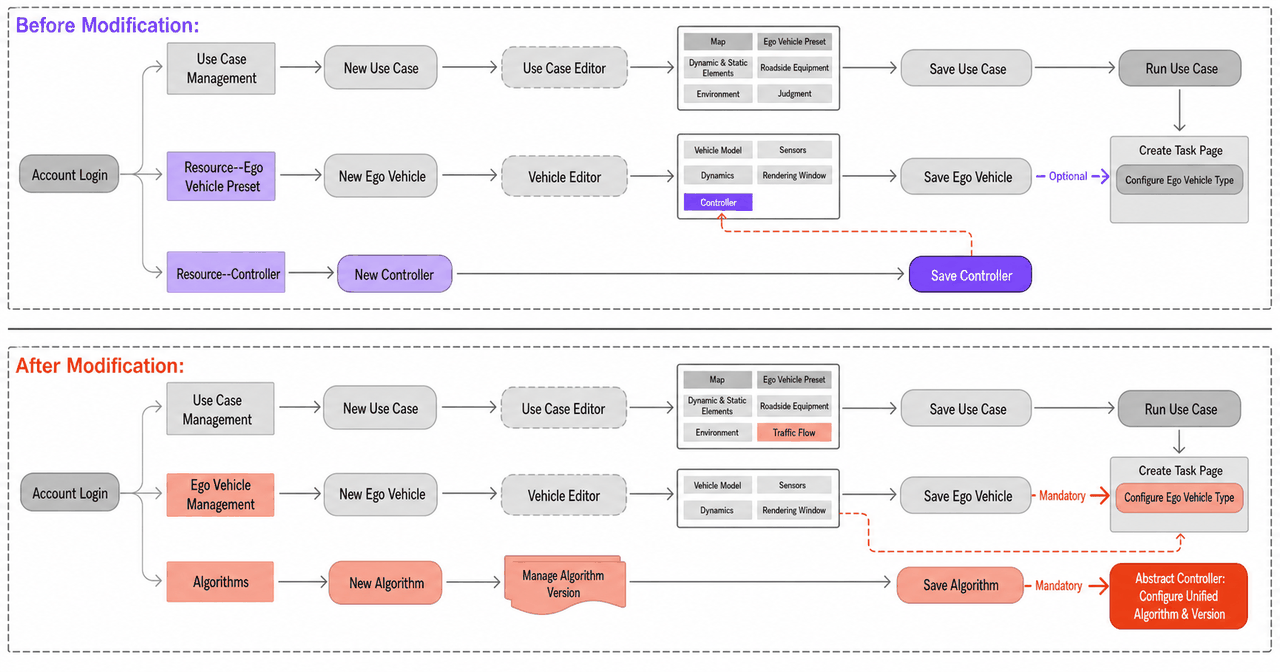
- Fully revamped task creation workflow — decoupling ego vehicle, scenario, and algorithm: Ego vehicle configurations are no longer bound to algorithms. Scenarios define behavior independently through abstract controllers. Task creation supports flexible combinations of ego vehicles, algorithms, and versions, significantly improving scenario reuse rates and test coverage, and enabling rapid cross-project validation and efficient delivery.

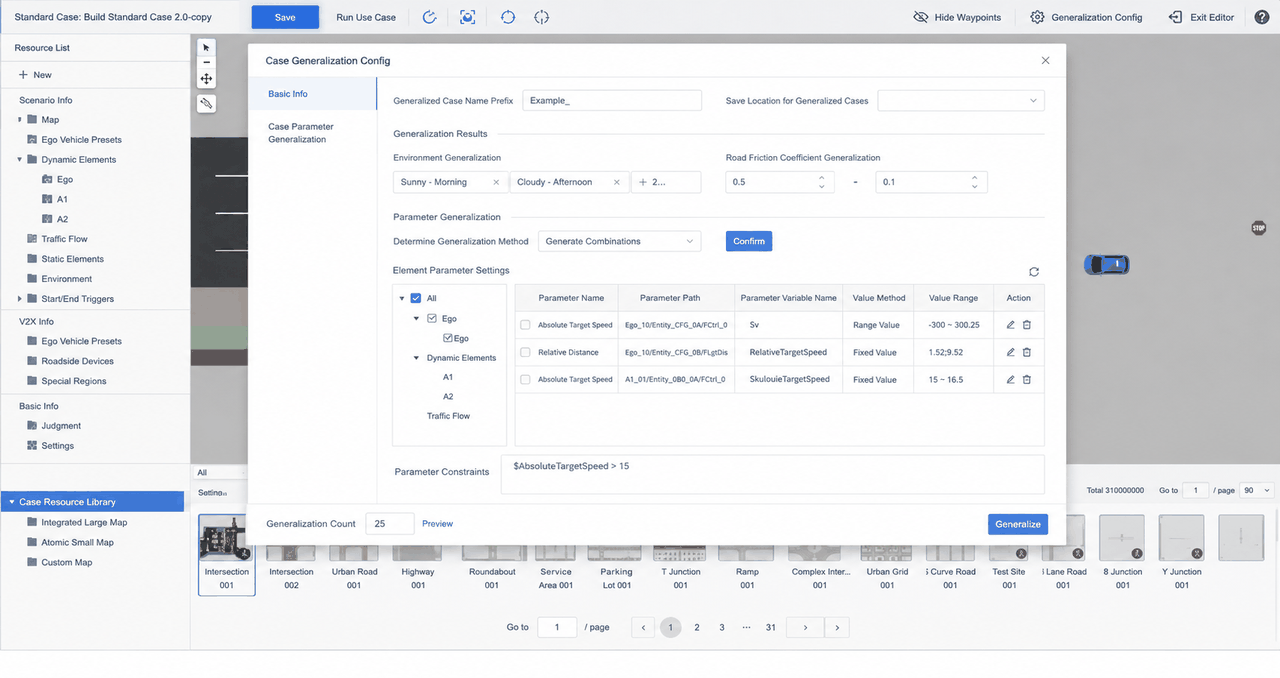
- Scenario generalization: Supports UI-based selection and configuration of generalization methods and parameters. Combined with multi-dimensional combinations of environment and road friction coefficients, this systematically expands the ODD editing scope, improving test coverage and generalization robustness of autonomous driving algorithms.

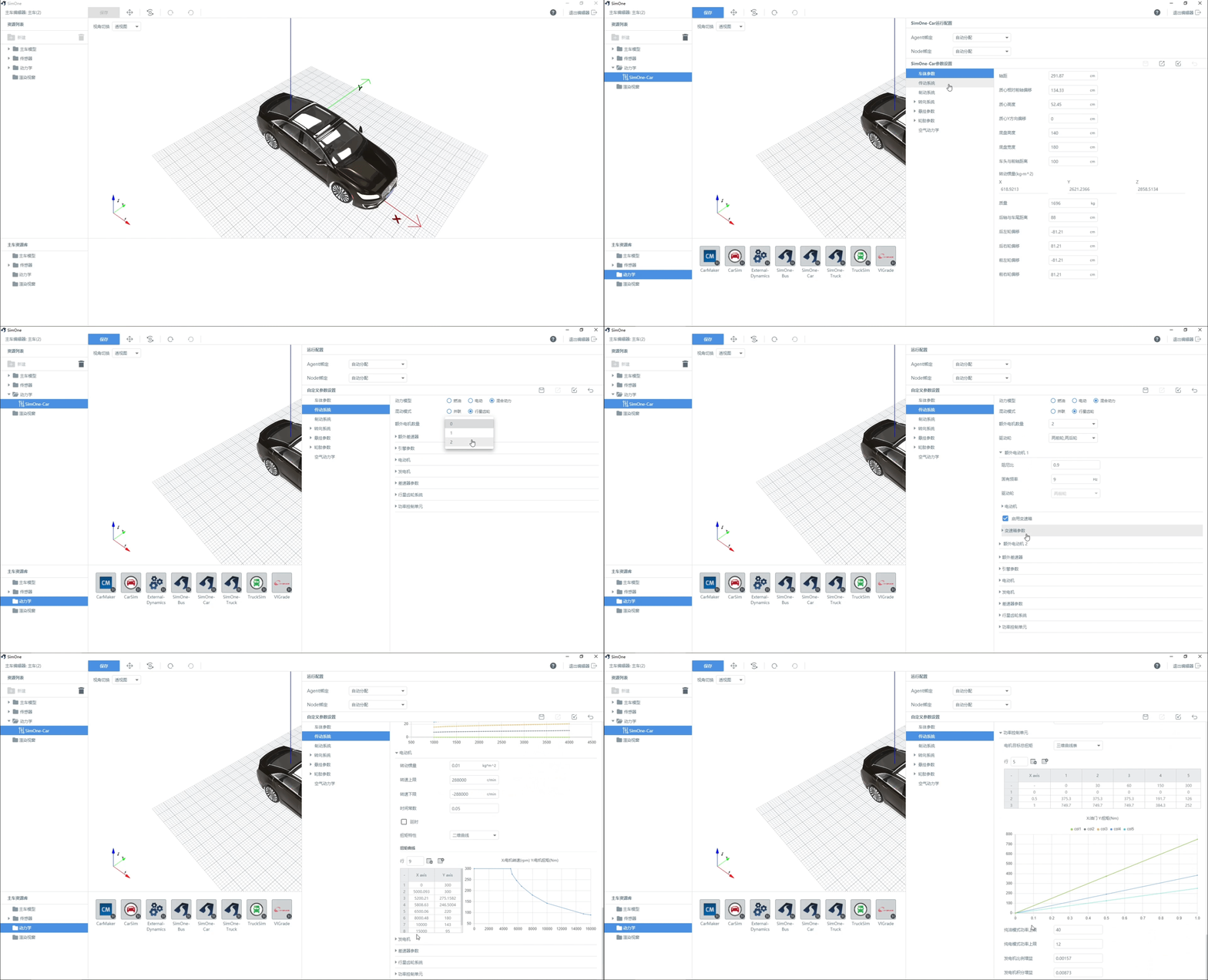
- Hybrid powertrain: Supports hybrid planetary gear and parallel modes. In hybrid mode, multiple motor outputs can be distributed to individual wheels.
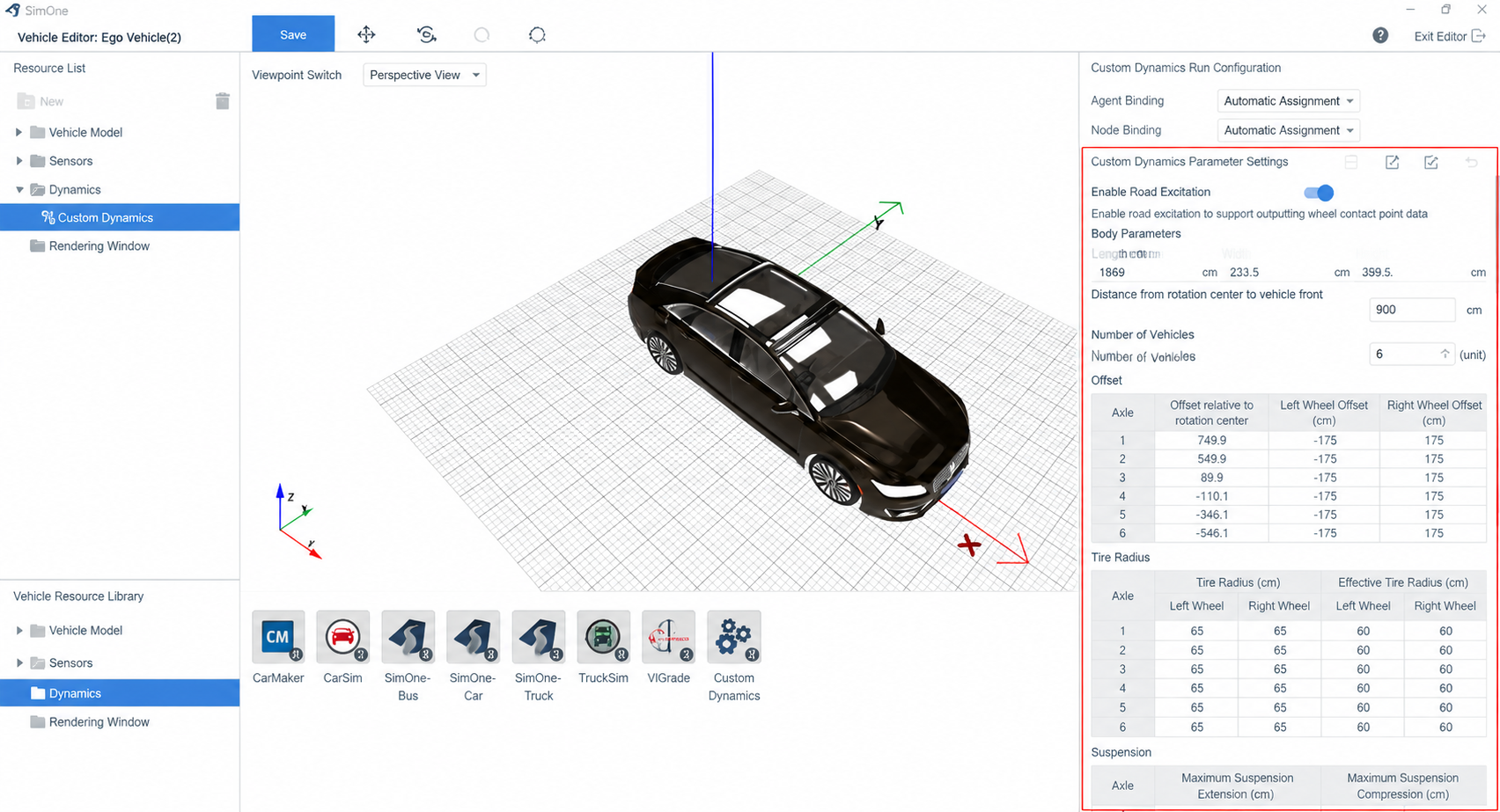
- Third-party dynamics interface: Supports configuration of axle, tire, and suspension parameters. Vehicle pose and tire positions are passed through the communication interface, and ground contact point positions and normal vectors are returned, enabling more flexible and precise integration.
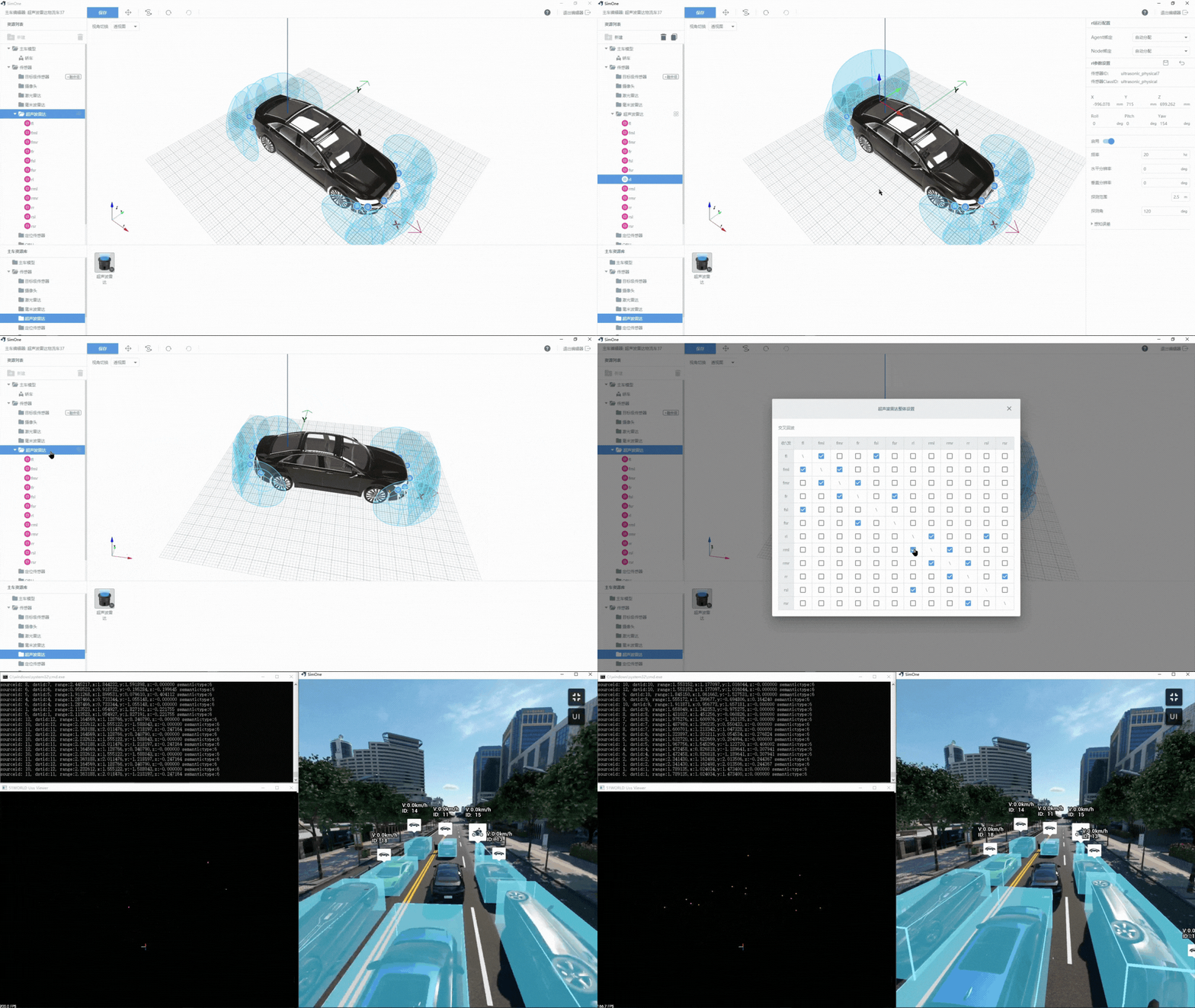
- Ultrasonic radar: Supports cross-echo formation among multiple ultrasonic sensors.
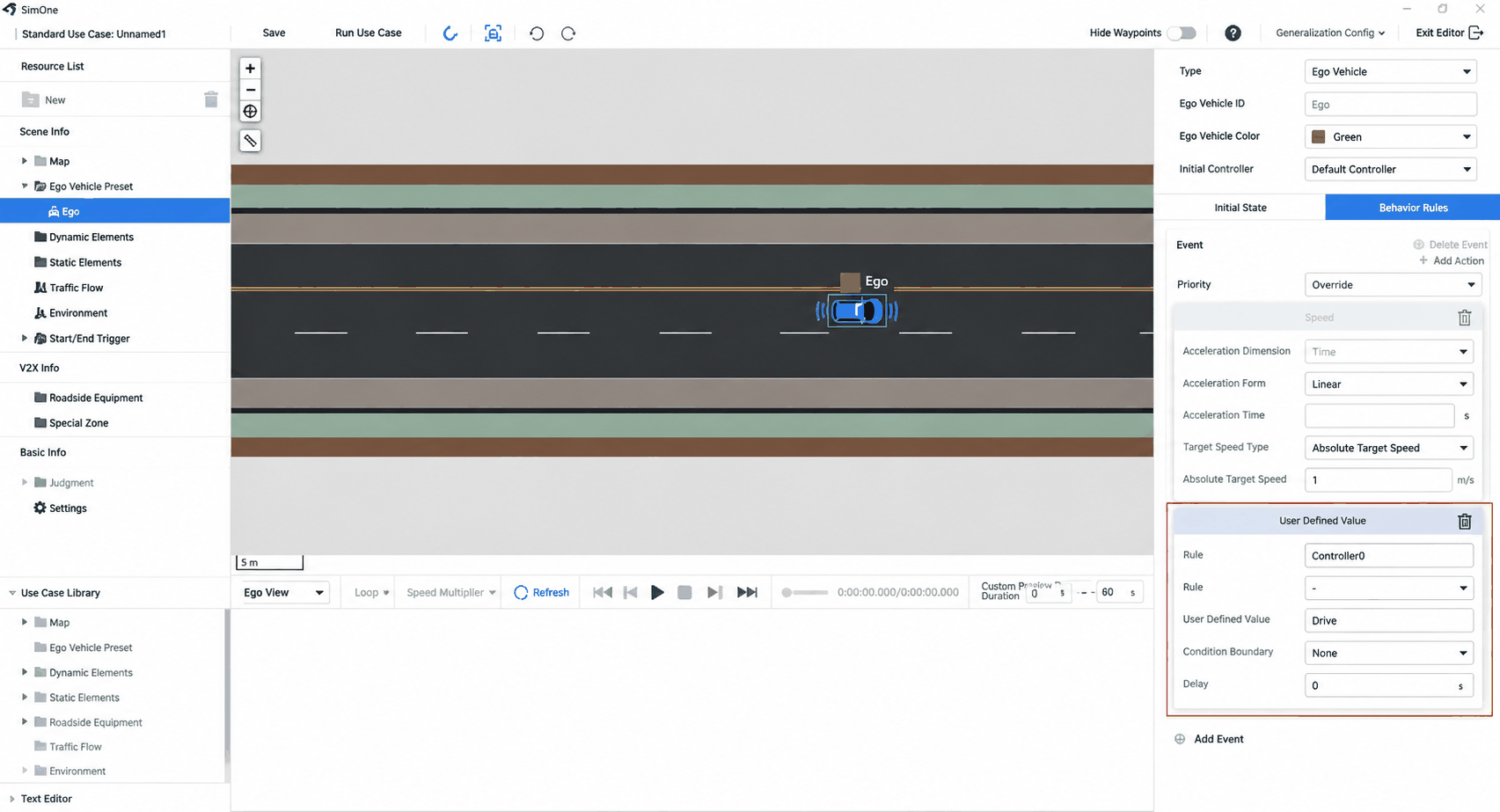
- User-defined trigger conditions: Added the
UserDefinedValueConditioncondition type, supporting external value comparison and interaction. This enables complex or custom conditional logic not covered by OpenSCENARIO, extending the flexibility of scenario logic.
- Algorithm output data storage: Added storage and management of algorithm output data during simulation runs, with support for viewing and downloading results for subsequent analysis and performance evaluation.
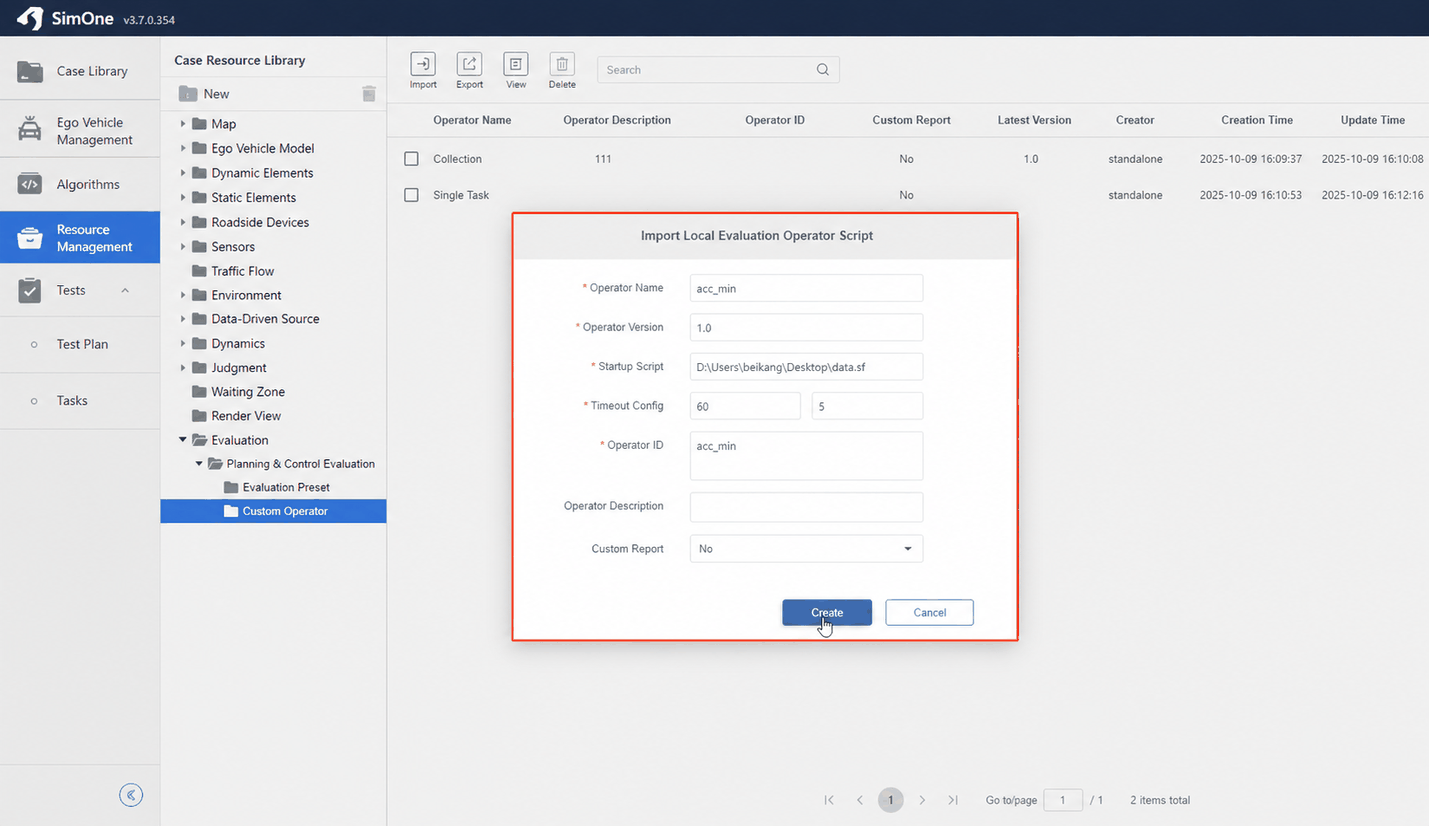
- Custom evaluation framework: Supports developing custom evaluation operators using Python scripts. These operators can be integrated into the built-in evaluation system for score fusion, or used independently to generate custom evaluation reports.
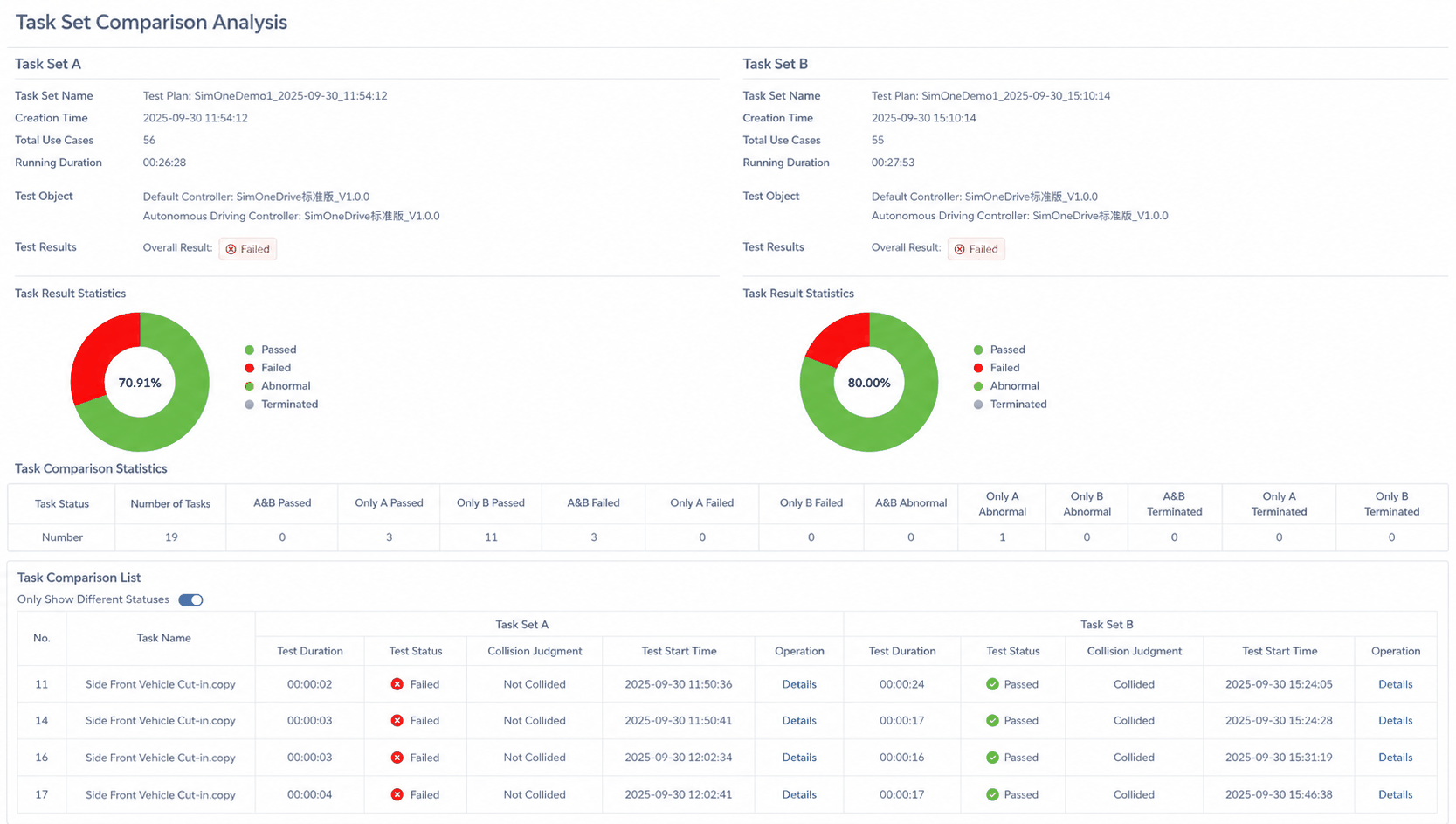
- Task set result comparison: Added chart-based analysis in the test plan management view, supporting comparison of results across different algorithm versions. This helps testing and R&D teams efficiently identify differences across iterations, accelerating issue diagnosis and algorithm validation.
- Extended 3DGS scene assets: Added a 3DGS parking lot scene and updated the 3DGS intersection scene.
- CI/CD automated integration testing (Collaborative Edition): Supports cloud-based Docker image algorithm integration. Combined with test plans and the Restful API, seamlessly connects to Jenkins to enable continuous algorithm iteration and automated validation, accelerating update and deployment cycles.

Improvements & Bug Fixes
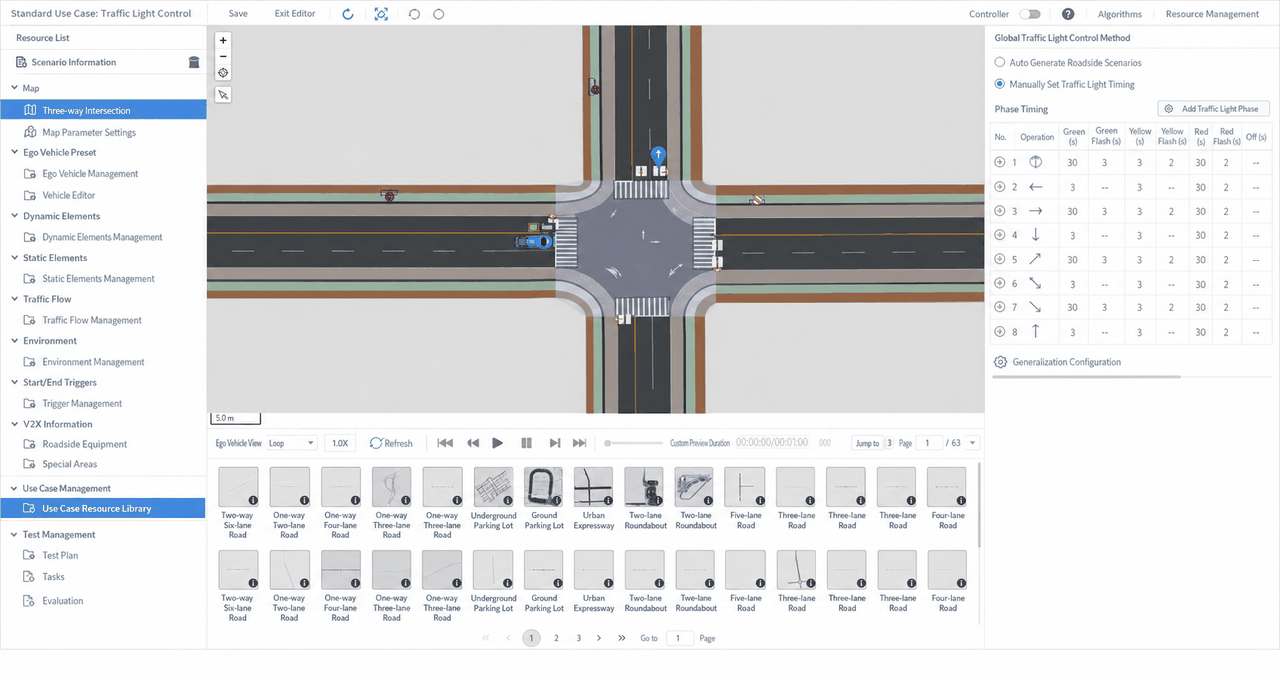
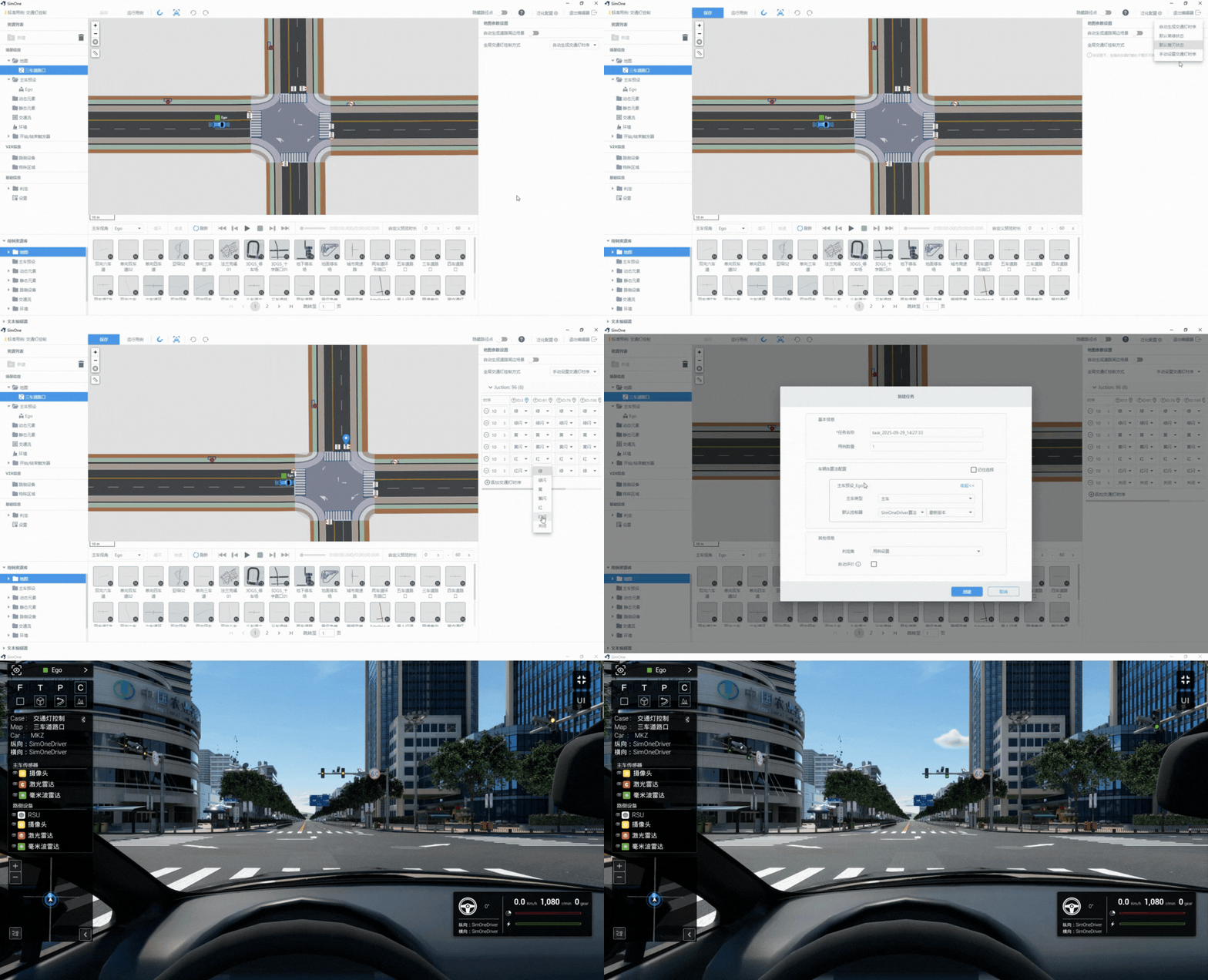
- Traffic light control: Optimized traffic light control with four modes: auto-generated timing, always green, always off, and manual setting. Global state and timing can be configured uniformly, helping users simulate realistic traffic light behavior and fault scenarios to improve test coverage and scene fidelity.
- Sensor performance optimization: Improved simulation frame rates for 4K distortion cameras and fisheye cameras; API output now supports stable 30+ fps output.
- Dynamics performance optimization: Improved acceleration control mode tracking; optimized Simulink module performance; added four-wheel steering support.
- Algorithm feedback data storage: Optimized feedback data management; supports viewing algorithm predicted trajectories during playback, improving playback consistency and aiding issue analysis.
- Disk space warning: Supports custom threshold-based disk monitoring to address issues such as failed scenario recording and application crashes caused by insufficient disk space, improving disk management reliability.
- Multi-user independent task playback (Collaborative Edition – Cloud): Optimized cloud task playback; supports independent replay without occupying test concurrency nodes, allowing multiple users to initiate playback simultaneously, improving resource utilization and collaborative validation efficiency.
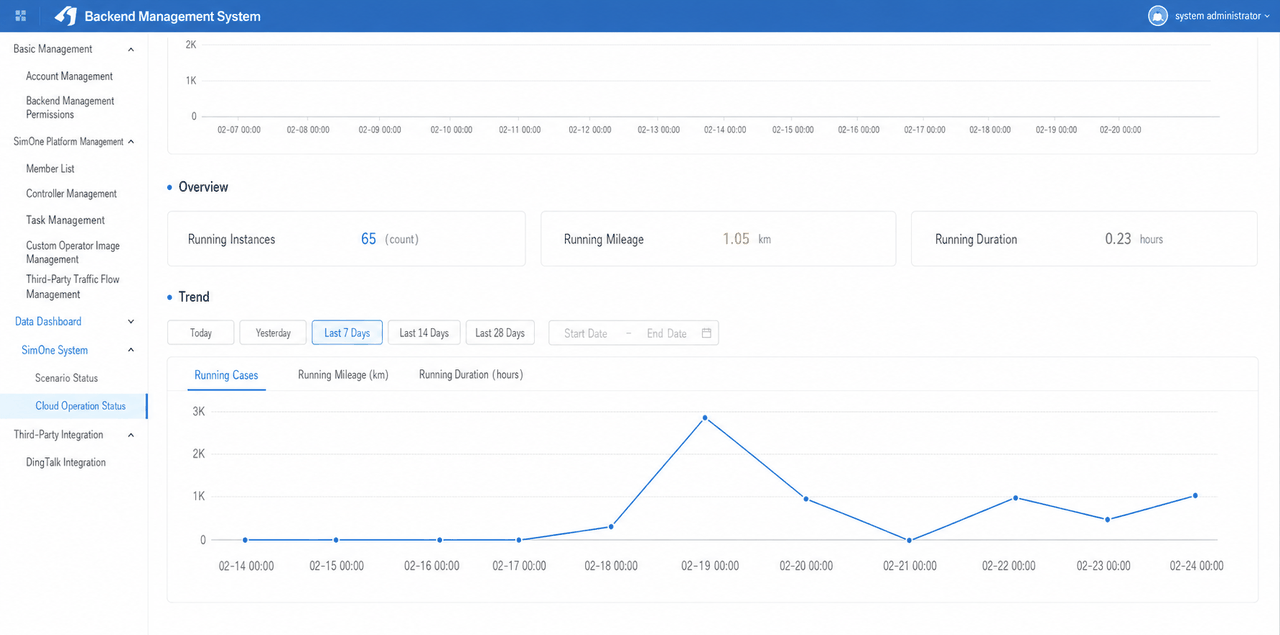
- Backend management system (Collaborative Edition – Cloud): Optimized the backend for the Collaborative Edition, adding department management and role permission configuration. Centralized management of controllers, custom operator images, third-party traffic flow images, data dashboards, and DingTalk notification resources for efficient centralized administration.
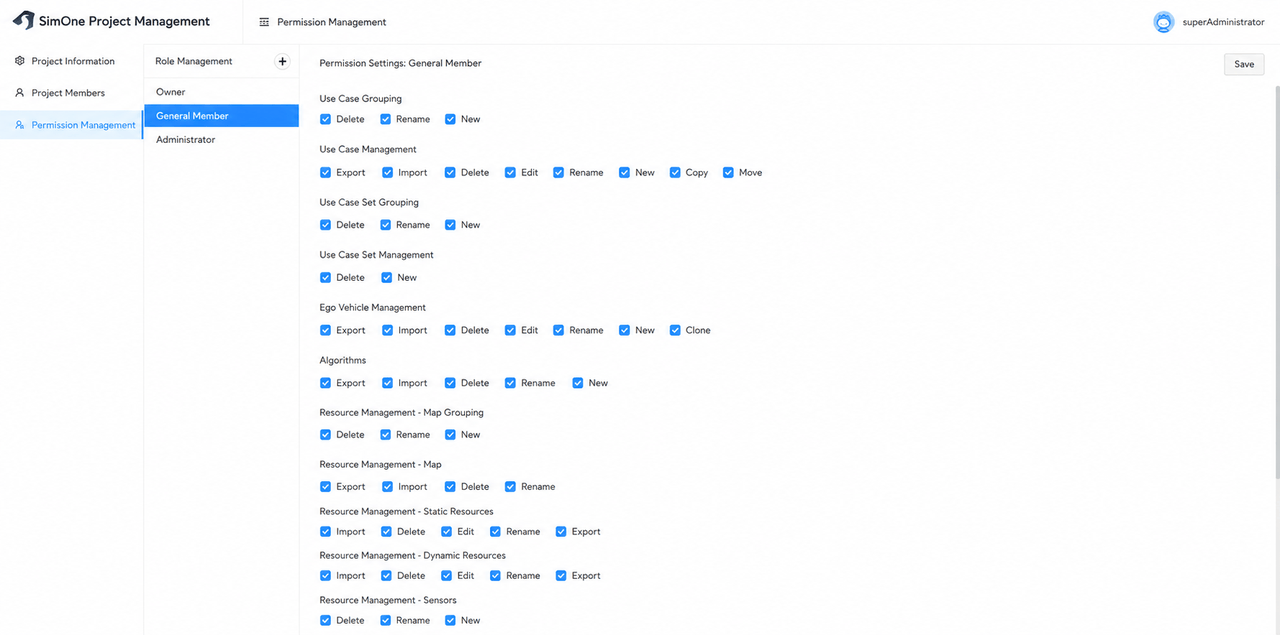
- New project settings (Collaborative Edition): Supports in-project user data sharing and cross-project isolation, with configurable member and role permissions (the current version supports the default project only; multi-project management will be expanded in future versions).
- Bug fixes: SimOne API updates and fixes for several known issues.
-
Fixed bugs:
-
Fixed throttle/torque display switching issue during simplified rendering in task view.
- Fixed unintended vehicle jitter and deceleration at low speeds caused by dynamics calibration issues.
- Fixed lane type display issue in the scenario editor.
- Fixed an issue where the Environment – Simulate Real toggle in the scenario editor had no effect.
- Fixed blank display of sensor viewport and configuration panel when importing an ego vehicle.
- Fixed an issue where switching the ego vehicle during a running task did not pass the ego vehicle model dimensions to the engine, causing incorrect BBox distance calculations.
- Fixed sensor count statistics issue when sensors are disabled in the ego vehicle editor.
- Fixed an issue on Linux where, after the task ended, the HD visualization window remained at small-window size when maximized during the task.